Grade 2 Social Science · 30 minutes
Learn: Ethnic groups and languages
See it as a chart
Introduction
Welcome. Today we are learning Social Science. You already know many things. We will add one new idea and practise it together. We are taught the idea with examples we can touch or tell. The heart of this lesson is Ethnic groups and languages.
What we will do
In about 30 minutes we will: (1) say hello and warm up, (2) learn the new idea with examples, (3) practise together, (4) try it on our own, (5) check we understood, (6) pack away and celebrate.
Learning goals
- I can say what Ethnic groups and languages means in my own words.
- I can show Ethnic groups and languages with a picture, object or action.
- I can try one small task about Ethnic groups and languages with help.
Let’s begin
Look around. Can you find something that makes you think of Ethnic groups and languages? Point to it. Smile. Now we begin.
Teach it
Ethnic groups and languages helps us understand people, places and the way we live in Zimbabwe. We start with you — your name, family and school — then we look a little further: community, country, heritage and Ubuntu/Unhu. We use short steps, songs, and plenty of praise. Nobody is rushed. The teacher’s guide talks about this idea like this: “Ethnic groups and languages 12 Topic 3: Heritage 14 Unit 8: Tangible and intangible heritage 14 Unit 9: Attributes of unhu/ubuntu/vumunhu 17 Unit 10: School as an agent of socialisation 19 Topic 4: Work and leisure 21 Unit 11: Work in the community 21 Unit 12: Production of g” Today we go deeper: we use two examples, one easy and one a little braver.
Let’s walk through Ethnic groups and languages slowly for Grade 2 Social Science. Step A — Notice: what can we see, hear, or touch that belongs to this idea? Step B — Name: say the idea in a short sentence a child can copy. Step C — Try: one tiny task using maize cobs. Step D — Talk: how does this help someone at home or at school in Zimbabwe? If the child looks tired, stop after Step C and return tomorrow. Remember: understanding is not a race. Repeating a small, true example is better than rushing a big, foggy one. When you finish, the child should be able to point, say, and try — not recite a page they do not feel.
Common mix-up for Ethnic groups and languages: children sometimes copy a sentence they do not feel. Ask them to show Ethnic groups and languages with cups of water instead of only saying it. In Grade 2 Social Science, a true example from Bulawayo beats a long copied definition.
What good looks like: the child can (1) say Ethnic groups and languages in their own words, (2) give a Zimbabwe example, (3) help someone else try a tiny task. If any piece is missing, return to the Learn lesson. Charts and pictures on this page are helpers, not decoration.
Worked example for Ethnic groups and languages (Grade 2 Social Science). A child starts with something they already know. They point, they name, they try. Example 5: they use a home object (a cup, a leaf, a coin, a song) to show the idea. Then they tell a helper: “This is Ethnic groups and languages because …” A second example is slightly harder: two objects, or a short sentence, or a tiny game. We do not skip the easy example. The easy one is the ladder.
How we unpack this
- Notice: look, listen or touch something that belongs to Ethnic groups and languages.
- Name: say the idea in one short sentence a child can copy.
- Try: one tiny task with a home object.
- Talk: how this helps at home or school in Zimbabwe.
Watch for this mix-up
Copying a long sentence is not the same as understanding Ethnic groups and languages. If the child cannot show it, go back one step.
Success looks like
- Says Ethnic groups and languages in their own words.
- Gives one Zimbabwe example.
- Helps someone else try a tiny task.
A story for this idea
A short story from Bulawayo. Baba sat with a child in Grade 2 and said, “Today we will understand Ethnic groups and languages in Social Science.” They looked at goats on the mat. First they named what they could see. Then they asked one curious question. When the child felt stuck, they did not skip the idea. They made it smaller: one object, one word, one try. After a drink of water they tried again, and the idea began to feel friendly. That is how Ethnic groups and languages moves from a book page into a real Zimbabwean day. You can tell this story at home in your own words, using people and objects you actually have.
Tell the story again, but change the place. The idea Ethnic groups and languages must still be true.
Did you know?
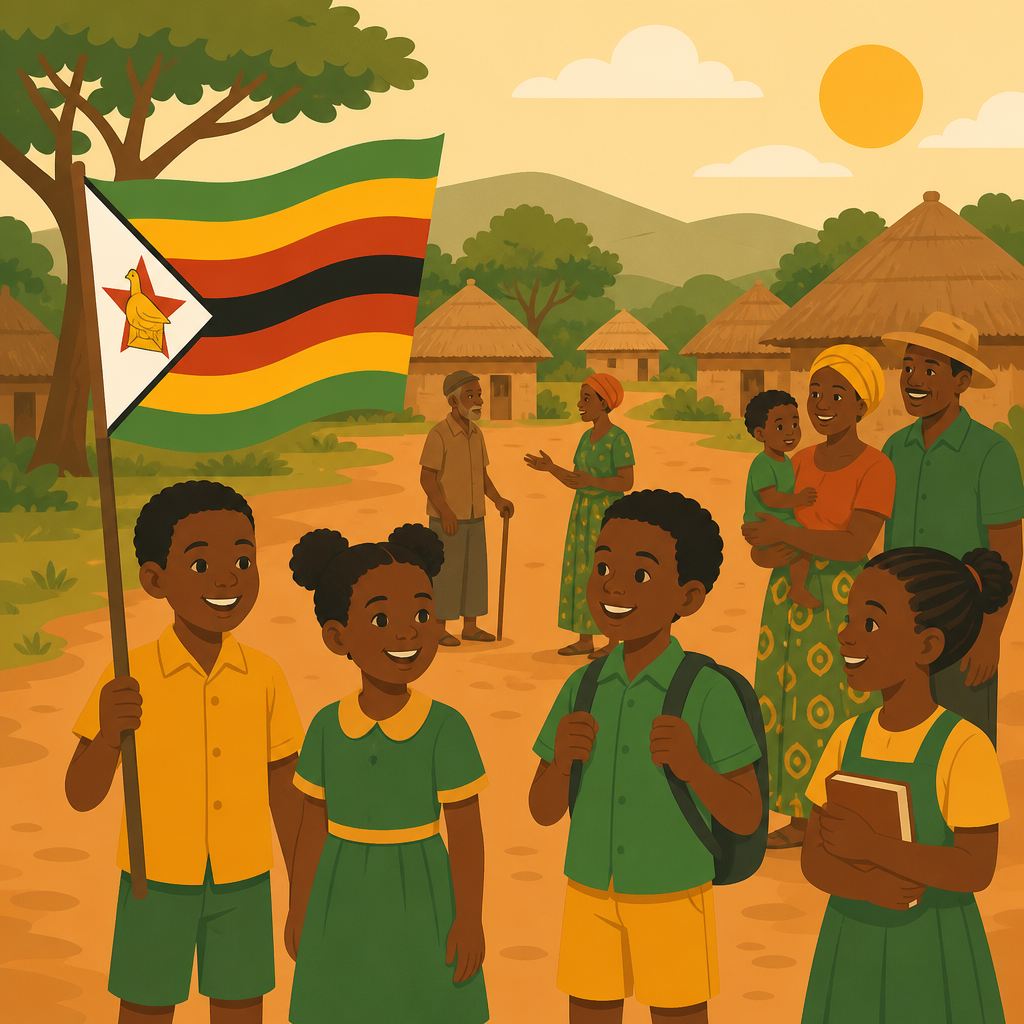
Zimbabwe’s heritage is people, places, and Ubuntu/Unhu. Ethnic groups and languages helps a child see where they belong — family, school, flag, and country.
Words to keep
Say each word. Clap the beats. Draw a tiny picture.
| Word | Meaning |
|---|---|
| Ethnic groups and languages | the main idea of this lesson in Social Science |
| example | a real thing that shows the idea |
| practise | to try more than once, kindly |
| check | to see if we understood |
In real life
Look for Ethnic groups and languages today in Gweru, or wherever you are. It may hide in mbira keys, in a conversation at the shops, in a game after school, or in helping at home. When you spot it, say: “That is Ethnic groups and languages.” Then tell one sentence about it. If you cannot go outside, draw the place and point to the idea in your drawing. Real life is the best exercise book because it does not close when the lesson ends.
Common mix-up for Ethnic groups and languages: children sometimes copy a sentence they do not feel. Ask them to show Ethnic groups and languages with cups of water instead of only saying it. In Grade 2 Social Science, a true example from Bulawayo beats a long copied definition.
What good looks like: the child can (1) say Ethnic groups and languages in their own words, (2) give a Zimbabwe example, (3) help someone else try a tiny task. If any piece is missing, return to the Learn lesson. Charts and pictures on this page are helpers, not decoration.
Try together
Do this with an adult or a friend:
- Say the name of today’s idea: Ethnic groups and languages.
- Point to something in the room that belongs to this idea, or draw it.
- Clap or jump once for each example you can find.
- Tell one sentence: “I see …”
Your turn
Draw Ethnic groups and languages. Colour it. Tell the story of your picture in a loud, proud voice.
Extra practice
Extra play (choose two):
- Sing a two-line song that names Ethnic groups and languages.
- Build Ethnic groups and languages with stones, bottle tops, or clay.
- Teach a toy or a younger child in one sentence.
- Colour a picture and label it with help.
Stop while it is still fun. Tomorrow we can choose a different two.
- Draw or photograph (with a helper) one real example and caption it.
Check you understand
Can you: (1) say Ethnic groups and languages? (2) show it with your hands or a drawing? (3) tell one thing you liked? If yes, you are ready. If not, we practise again — that is learning.
Wrap up
Today we met Ethnic groups and languages. Tomorrow we will use it again, a little deeper. Tell someone at home one new word or one new idea. Drink water, stretch, and be proud of trying.
If you get stuck: make the task smaller. Use one object, one word, or one drawing. Ask for the idea in ChiShona or IsiNdebele first, then try English. Drink water, stretch, and try one more time — then stop if you are tired.
Materials
Crayons, paper, and something to count or hold. An adult nearby to help. A map of Zimbabwe if you have one, or a drawing of your home and school.
Tip for the helper
Ask: “Teach me Ethnic groups and languages as if I never went to school.” Listen without jumping in. If the explanation is wobbly, try one smaller example together. A short, calm practice after sadza is better than a long, tired argument.
Notes from the teacher’s guide
From the official PlusOne guide (PlusOne-HBC-Social-Science-Grade-2-TG.pdf): use this page as a companion, not a copy of every line. Guide extract: Ethnic groups and languages 12 Topic 3: Heritage 14 Unit 8: Tangible and intangible heritage 14 Unit 9: Attributes of unhu/ubuntu/vumunhu 17 Unit 10: School as an agent of socialisation 19 Topic 4: Work and leisure 21 Unit 11: Work in the community 21 Unit 12: Production of g
Open the book: PlusOne HBC Social Science Grade 2 TG PlusOne Grade 2 Schemes of work T1 PlusOne Grade 2 Schemes of work T2
More from Pindah
Pindah Course is part of the Pindah.org offering. Schools use Frame for administration and Basa for organisation login. Heritage-Based Curriculum overview: pindah.org HBC lessons.